The Forgotten History of Candles Before Electricity
Before the light bulb, light was a consumable. You did not switch it on; you burned it. And what you burned told everyone in the room exactly how much money you had.
The economist William Nordhaus made this concrete in a now-famous 1996 study. He calculated the price of light across six thousand years and found that in Babylonian times, an hour of decent illumination cost roughly the equivalent of a full day's wages. By 1800 it was still expensive enough that a working household in London rationed candles the way we ration heat. Nordhaus's own estimate: light today costs something like one ten-thousandth of what it cost our ancestors.
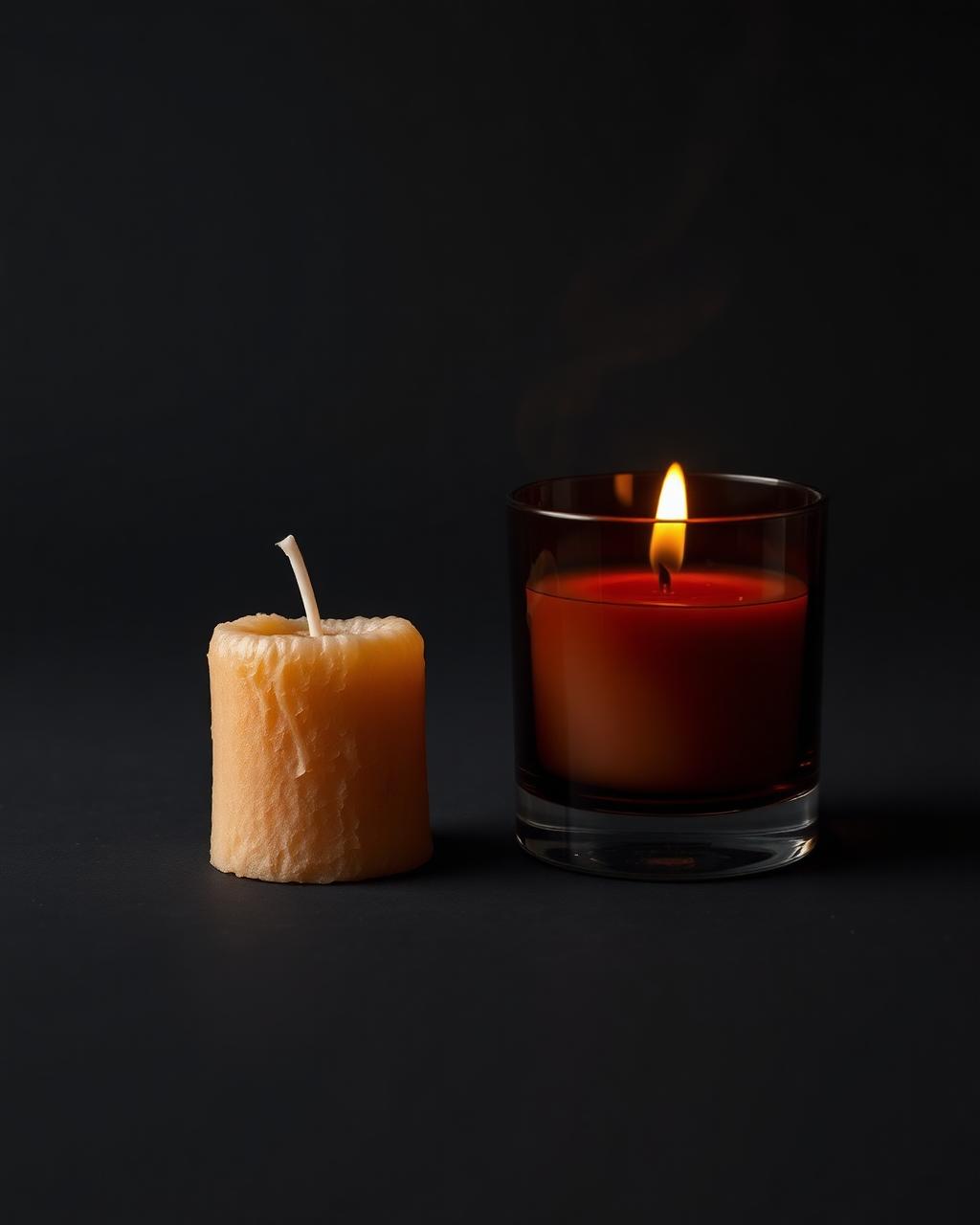
The everyday candle of that era was tallow — rendered beef or mutton fat, poured or dipped around a twisted flax wick. Tallow was cheap because it was a slaughterhouse byproduct, and it behaved like one. It smoked. It guttered. It smelled, insistently, of the animal it came from, and it softened in warm weather so candles bent in their holders. Wicks did not self-consume, which meant somebody had to trim the charred end every twenty or thirty minutes or the flame would drown in its own residue. Households owned dedicated snuffers for the job. Falling asleep before the trimming was how houses burned down.
The wealthy burned beeswax instead. It gave a brighter, steadier, nearly odourless flame — and it cost several times what tallow did, because bees are slow and hives are small. Churches specified beeswax for the altar. Aristocratic households used it for the rooms guests saw and tallow for the rooms they didn't. The same building, lit two different ways, depending on who was watching.
This shaped ordinary life more than we tend to imagine. Evening work was limited by what you were willing to burn. Reading after dark was a small luxury. Winter in northern Europe meant sixteen dark hours a day, and the length of your evening was, quite literally, a purchase decision.
It is worth sitting with that for a moment the next time you light something. For thousands of years, a candle was not atmosphere. It was the whole of the evening, and it was running out.