Why Ancient Romans Burned Candles During the Day
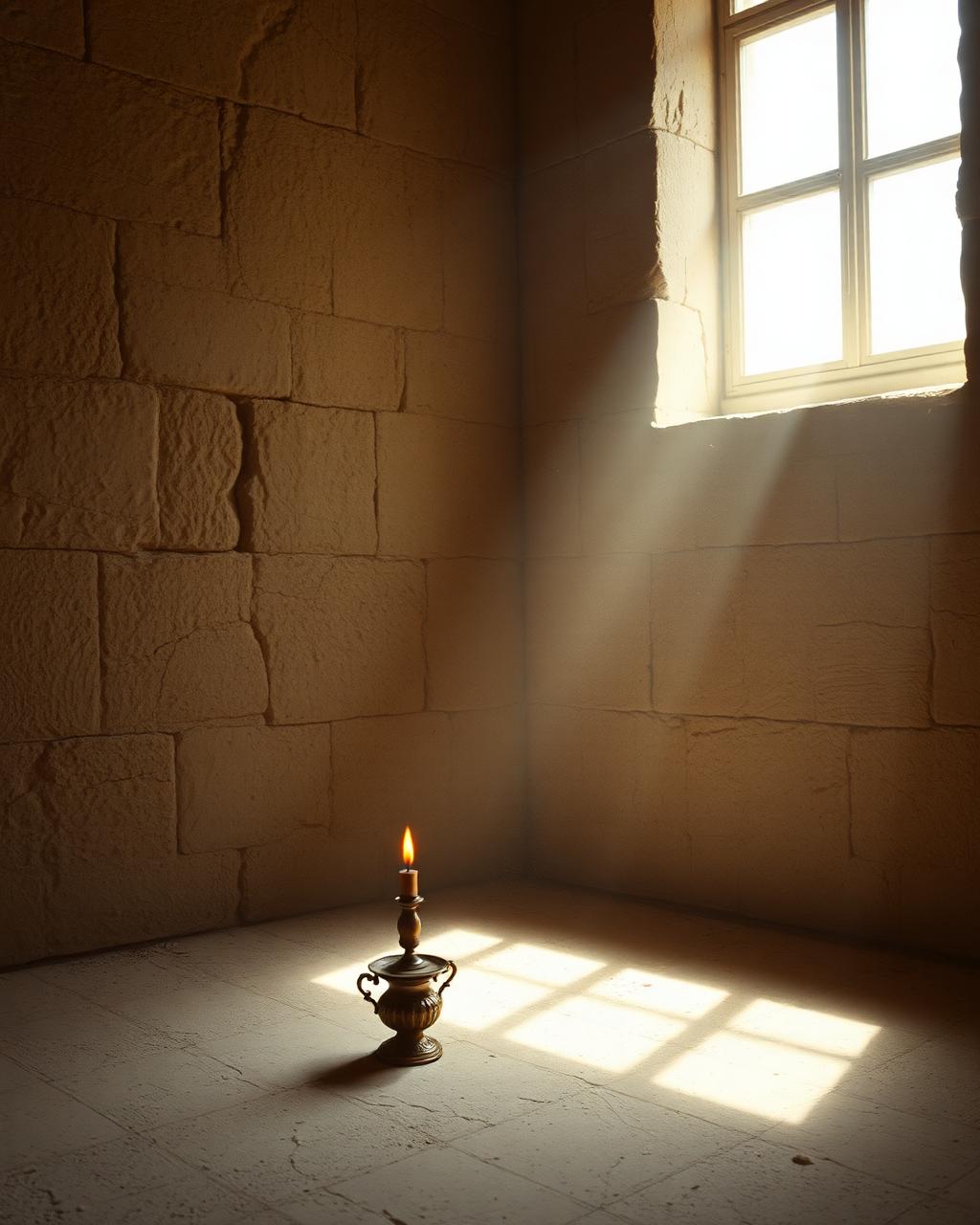
A Roman house at midday was well lit. The atrium was open to the sky, the compluvium let in light and rain, and the courtyard did most of the work an electric fixture does now. And yet flames burned indoors anyway — in lamps, in tapers, in the small shrine set into the wall of nearly every home.
That shrine was the lararium, and it housed the Lares: the household spirits believed to guard the family and the physical building. The flame kept before them was not illumination, it was maintenance of a relationship. It was tended on the Kalends, the Nones and the Ides of every month, and at any moment that mattered — a birth, a marriage, a son leaving for the army, a journey beginning. Letting it go out was a lapse in obligation, not a lighting problem.
Flame also marked thresholds. Roman wedding processions carried torches of whitethorn to the bride's new home. Funerals moved by torchlight even at noon; the Latin funus derives from the same root as the torches carried in the rite. A daylight flame said: something is changing here. Look.
And then there was Saturnalia, in mid-December, where wax candles — cerei — were exchanged as gifts by the thousands. Historians have argued for centuries about the meaning: a nod to the returning sun after the solstice, a symbolic release from the darkness of the old year, or simply an affordable gift that everyone could give and everyone could use. Probably all three. Practices survive when they work on several levels at once.
What is striking is how little of this logic has actually changed. We still light candles in rooms that are already lit — at a dinner, on a cake, at a memorial, on the first evening in a new apartment. The flame is not there to help us see. It is there to mark that the moment is not an ordinary one.