Why Candlelight Makes People Look More Attractive
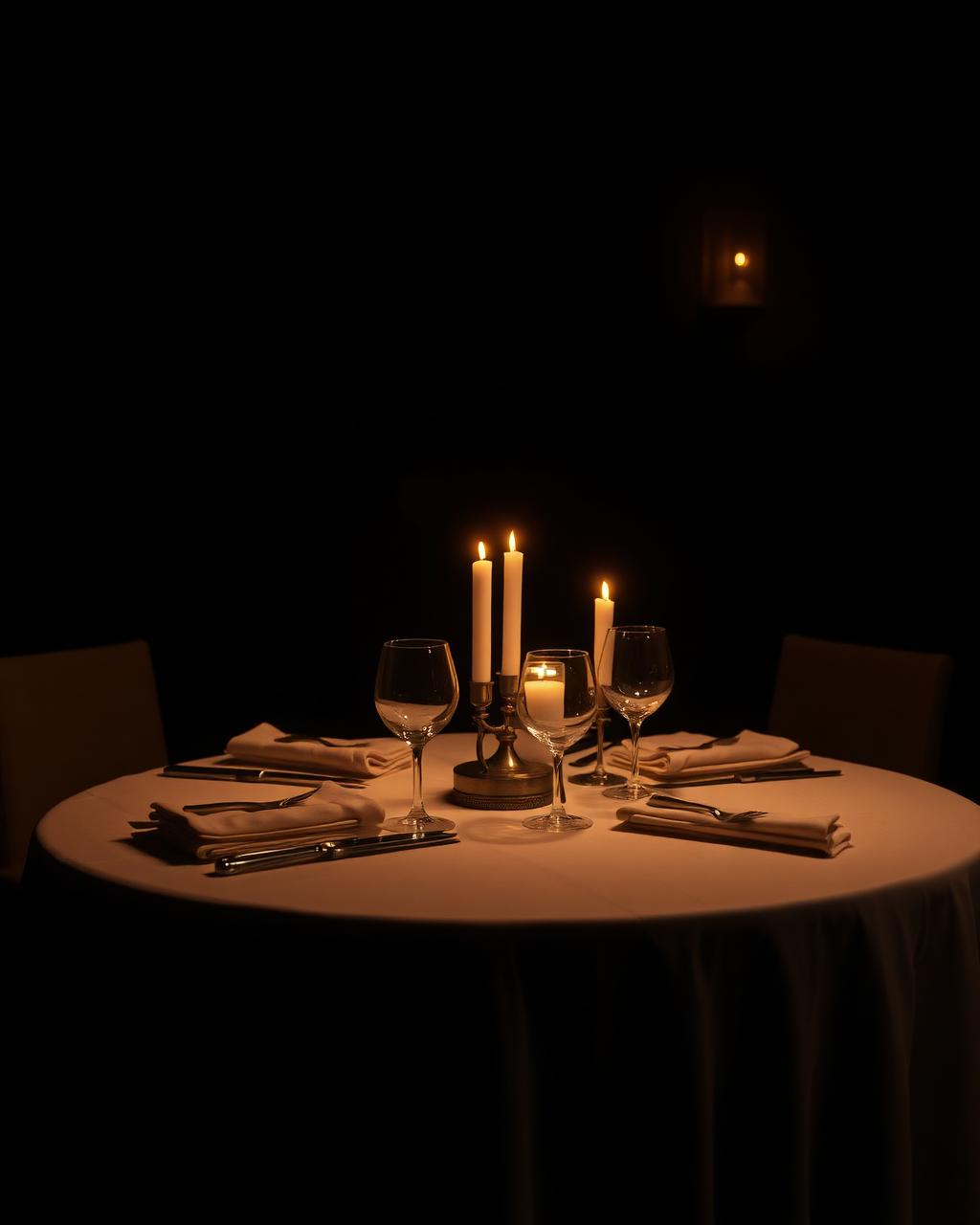
The candlelit dinner is such a cliché that it is easy to miss that it is doing something measurable. Several things, in fact, and they compound.
Start with colour temperature. Candle flame sits around 1,800K — far warmer than tungsten at 3,200K, and drastically warmer than daylight at 5,600K. That amber cast pushes skin toward gold, suppresses blue and green undertones, and reduces the visibility of redness, broken capillaries and blemishes. It is close to what a colourist would dial in deliberately.
Then the quality of the source. A candle is a small, close, low-positioned light with no hard edge, producing gentle gradients rather than sharp shadow lines. Fine lines and skin texture depend on shadow to be visible at all; soft, low-contrast light substantially reduces them. Cinematographers have used low, warm, soft key light on faces for a century for exactly this reason.
Pupils do the rest. In dim conditions the pupil dilates to admit more light — and there is a long line of research, going back to Eckhard Hess's work in the 1960s, indicating that dilated pupils are perceived as more attractive and more engaged, and that people unconsciously mirror the dilation of the person they are looking at. Low light produces the physical signal that the brain reads as interest.
Two more effects sit underneath. Dim environments reduce visual detail overall, and the brain fills the gaps with a smoothed, slightly idealised reconstruction. And the flame's constant flicker means the light on a face never repeats — the eye keeps re-reading it, which is why a candlelit face holds attention in a way a flatly lit one does not.
Put together: warmer skin, softer texture, wider pupils, less detail, constant movement. None of it is flattery. It is just what happens to a face under a small, warm, moving flame — which is the light humans looked at each other by for most of our history.