The Candle That Changed the World
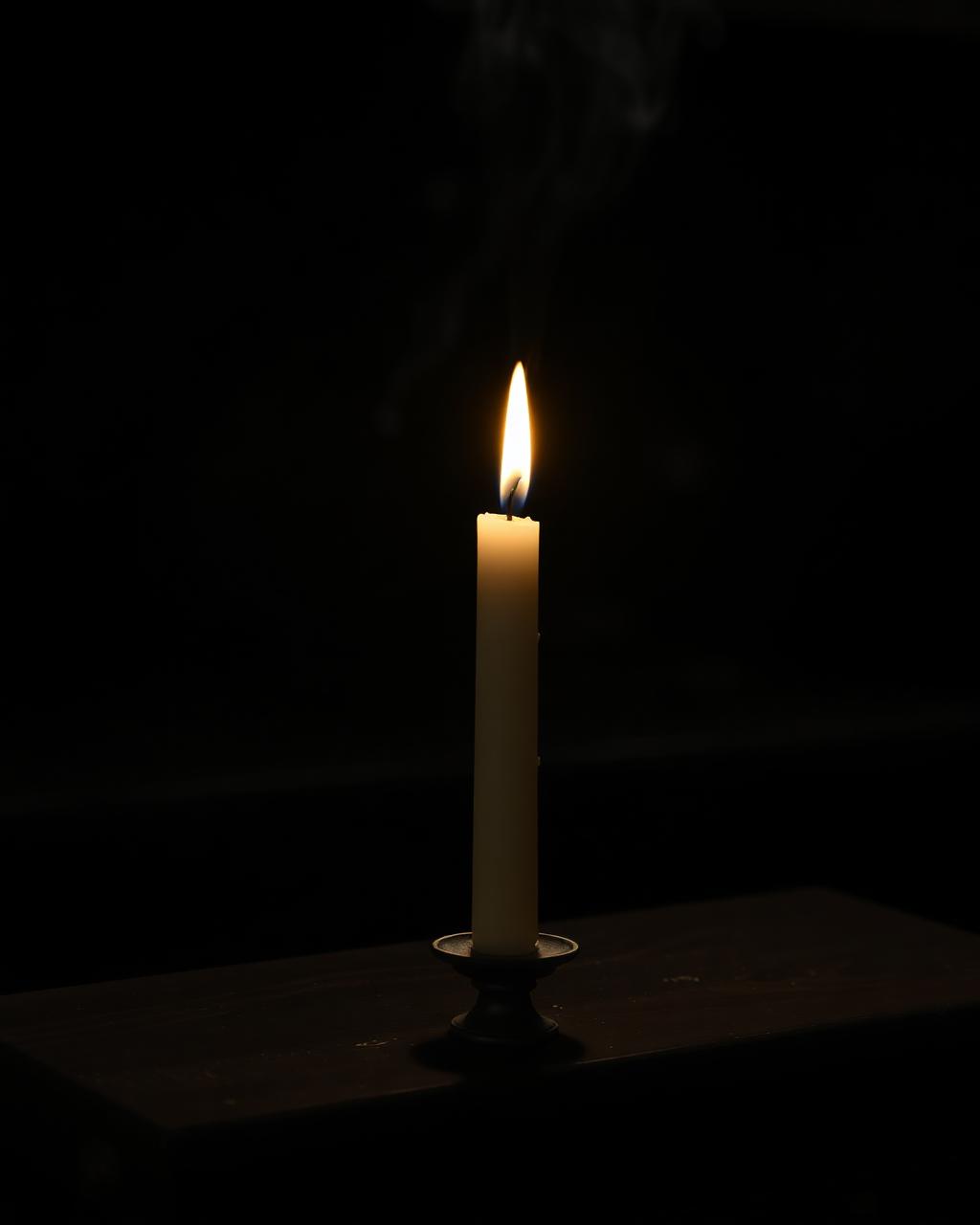
In the winter of 1848, Michael Faraday — the man behind electromagnetic induction, and arguably the most gifted experimentalist of the nineteenth century — stood before an audience at the Royal Institution in London and lit a candle. He then spent six lectures on it.
The series was published as The Chemical History of a Candle, and it has never gone out of print. Faraday's argument was that a candle is not a simple object at all. It is a self-regulating engine, and if you can genuinely explain one, you have explained combustion, capillary action, convection, gas laws and the composition of the atmosphere along the way.
The mechanism deserves the attention. A candle does not burn wax. The flame's heat melts a shallow pool at the surface; the wick draws liquid wax upward by capillary action, exactly as a plant draws water; the heat vaporises that liquid into gas; and it is the gas that burns. The flame is hollow. Its brightness comes from carbon particles glowing incandescent in the outer zone at around 1,400°C. Hot gas rises, cool air rushes in beneath, and that convection loop is what pulls the flame into its familiar teardrop shape and keeps the whole system feeding itself.
Faraday's demonstration of this was pure theatre: he blew out a candle, held a lit match in the ribbon of white smoke several inches above the wick, and the flame travelled back down the smoke to relight the candle. Proof that the smoke was unburned fuel, not waste.
The lectures mattered beyond chemistry. Faraday had almost no formal education and had begun as a bookbinder's apprentice; the Christmas Lectures he established were explicitly for young people, and they helped establish the idea that serious science could be explained to anyone without being diluted. That idea is still running.
It also left behind the best possible argument for paying attention to ordinary things. Faraday chose the candle precisely because it was the most unremarkable object in the room.