The World's Oldest Candle
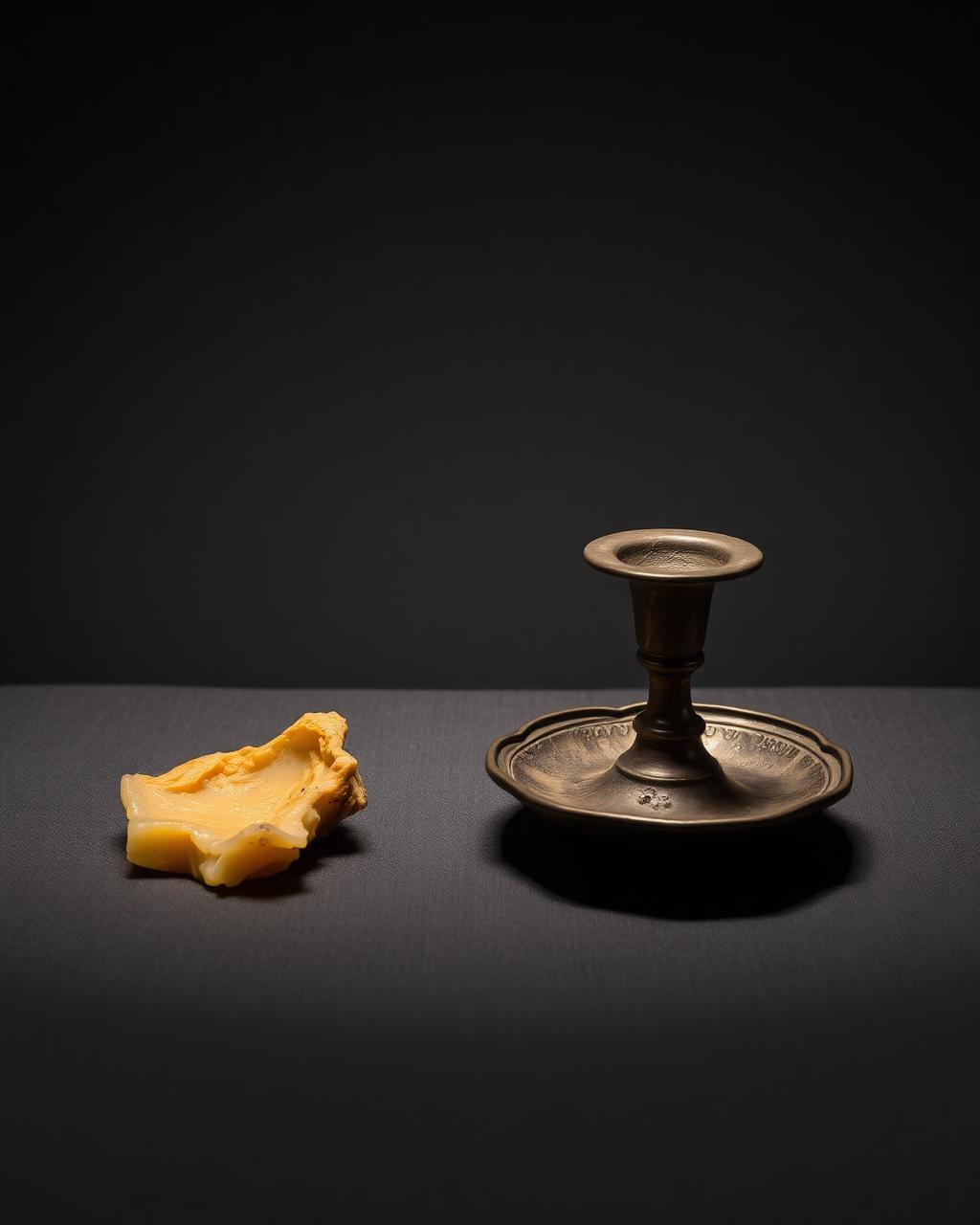
Ask what the oldest surviving candle is and you get a frustrating answer: wax does not last. It melts, it burns, it is eaten by insects, it degrades. Almost everything we know about early candles we know from the objects that held them, not the candles themselves.
The earliest strong evidence comes from Egypt and Crete around 3000 BCE, in the form of clay candleholders — objects shaped for a standing taper rather than a pooled oil lamp. Egyptian rushlights predate even that: reed cores soaked in melted animal fat, burned without a true wick. Technically not candles, but the same idea, several thousand years early.
The oldest surviving candles themselves are far more recent and far stranger. Fragments of beeswax candles were recovered from a first-century tomb at Vaison-la-Romaine in France. Coiled beeswax tapers were found in eighth-century Chinese tombs, made from insect wax and seeds and preserved by the sealed, dry conditions of the burial. In every case, the candle survived not because it was durable but because it was buried, undisturbed and airless.
Meanwhile China had developed something recognisably modern by the Qin dynasty, around 221 BCE: candles made from whale fat, and later from wax pressed from the tallow tree, with wicks of rolled rice paper. Japan produced candles from tree nut wax. India boiled cinnamon fruit for a wax used in temples — arguably the first scented candles anyone made deliberately, and a very long way ahead of the market.
The honest answer, then, is that the candle has no single origin. It was invented repeatedly, in parallel, wherever people had access to something that melted and something that would hold a flame. Which is a better story than a single first candle, and closer to how most good objects actually come about.